Friday, November 24, 2006

No One to Lose to

By Maureen Dowd
The New York Times
After the Thanksgiving Day Massacre of Shiites by Sunnis, President Bush should go on Rupert Murdoch’s Fox News and give an interview headlined: “If I did it, here’s how the civil war in Iraq happened.”

He could describe, hypothetically, a series of naïve, arrogant and self-defeating blunders, including his team’s failure to comprehend that in the Arab world, revenge and religious zealotry can be stronger compulsions than democracy and prosperity.

But W. is not yet able to view his actions in subjunctive terms, much less objective ones. Bush family retainers are working to deprogram him, but the president is loath to strip off his delusions of adequacy.

W. declined to tear himself away from his free-range turkey and pumpkin mousse trifle at Camp David and reassure Americans about the deadliest sectarian attack in Baghdad since the U.S. invaded. More than 200 Shiites were killed and hundreds more wounded by car bombs and a mortar attack in Sadr City. October was the bloodiest month yet for civilians, and in the last four months, some 13,000 men, women and children have died.

American helicopters and Iraqi troops did not arrive for two hours after Sunni gunmen began a siege on the Health Ministry controlled by the Shiite cleric Moktada al-Sadr, who has a militia that kills Sunnis and is married to the Maliki government.

Continuing the cycle of revenge yesterday, Shiite militiamen threw kerosene on six Sunnis and set them on fire, as Iraqi soldiers watched, and killed 19 more.

The New York Times and other news outlets have been figuring out if it’s time to break with the administration’s use of euphemisms like “sectarian conflict.” How long can you have an ever-descending descent without actually reaching the civil war?

Some analysts are calling it genocide or clash of civilizations, arguing that civil war is too genteel a term for the butchery that is destroying a nation before our very eyes. Anthony Shadid, The Washington Post reporter who won a Pulitzer Prize for his Iraq coverage, went back recently and described “the final, frenzied maturity of once-inchoate forces unleashed more than three years ago by the invasion. There was civil-war-style sectarian killing, its echoes in Lebanon a generation ago. Alongside it were gangland turf battles over money, power and survival; a raft of political parties and their militias fighting a zero-sum game; a raging insurgency; the collapse of authority; social services a chimera; and no way forward for an Iraqi government ordered to act by Americans who themselves are still seen as the final arbiter and, as a result, still depriving that government of legitimacy. Civil war was perhaps too easy a term, a little too tidy.”

It will be harder to sell Congress on the idea that America’s troops should be in the middle of somebody else’s civil war than to convince them that we need to hang tough in the so-called front line of the so-called war on terror against Al Qaeda.

With Iraq splitting, Tony Snow indulges in the ludicrous exercise of hair-splitting. He said that in past civil wars, “people break up into clearly identifiable feuding sides clashing for supremacy.” In Iraq, “you do have a lot of different forces that are trying to put pressure on the government and trying to undermine it. But it’s not clear that they are operating as a unified force.” But Lebanon was a shambles with multiple factions, and everybody called that a civil war.

Mr. Snow has said this is not a civil war because the fighting is not taking place in every province and because Iraqis voted in free elections. But that’s like saying that the Battle of Gettysburg only took place in one small corner of the country, so there was no real American Civil War. And there were elections during our civil war too. President Lincoln was re-elected months before the war’s end.

The president’s comparison to how Vietnam turned out a generation later, his happy talk that Iraq is going to be fine, is preposterous.

As Neil Sheehan, a former Times reporter in Vietnam who wrote the Pulitzer Prize-winning “A Bright Shining Lie,” told me: “In Vietnam, there were just two sides to the civil war. You had a government in Hanoi with a structure of command and an army and a guerrilla movement that would obey what they were told to do. So you had law and order in Saigon immediately after the war ended. In Iraq, there’s no one like that for us to lose to and then do business with.”

The questions are no longer whether there’s a civil war or whether we can achieve a military victory. The only question is, who can we turn the country over to?

At the moment, that would be no one.

Photo Credit: Maureen Dowd. (Fred R. Conrad/The New York Times)

Digital Age Banana Republic


The Krug Man thankfully uses his clout to shed light on our broken election system. "Do we have to wait for a constitutional crisis to realize that we're in danger of becoming a digital-age banana republic?" he asks.

This is an issue all of us, regardless of party affiliation, needs to monitor. We must demand comprehensive election reform to insure that our votes are counted accurately.

We must also fight tooth and nail to remove private money from the election process. As long as candidates must raise ridiculously large sums of money as a prerequisite to seeking office, there will remain a conflict for politicians between the interests of those who donate money and the vast majority of those who don't or can't.

When Votes Disappear
By Paul Krugman
The New York Times
You know what really had me terrified on Nov. 7? The all-too-real possibility of a highly suspect result. What would we have done if the Republicans had held on to the House by a narrow margin, but circumstantial evidence strongly suggested that a combination of vote suppression and defective — or rigged — electronic voting machines made the difference?

Fortunately, it wasn’t a close election. But the fact that our electoral system worked well enough to register an overwhelming Democratic landslide doesn’t mean that things are O.K. There were many problems with voting in this election — and in at least one Congressional race, the evidence strongly suggests that paperless voting machines failed to count thousands of votes, and that the disappearance of these votes delivered the race to the wrong candidate.

Here’s the background: Florida’s 13th Congressional District is currently represented by Katherine Harris, who as Florida’s secretary of state during the 2000 recount famously acted as a partisan Republican rather than a fair referee. This year Ms. Harris didn’t run for re-election, making an unsuccessful bid for the Senate instead. But according to the official vote count, the Republicans held on to her seat, with Vern Buchanan, the G.O.P. candidate, narrowly defeating Christine Jennings, the Democrat.

The problem is that the official vote count isn’t credible. In much of the 13th District, the voting pattern looks normal. But in Sarasota County, which used touch-screen voting machines made by Election Systems and Software, almost 18,000 voters — nearly 15 percent of those who cast ballots using the machines — supposedly failed to vote for either candidate in the hotly contested Congressional race. That compares with undervote rates ranging from 2.2 to 5.3 percent in neighboring counties.

Reporting by The Herald-Tribune of Sarasota, which interviewed hundreds of voters who called the paper to report problems at the polls, strongly suggests that the huge apparent undervote was caused by bugs in the ES&S software.

About a third of those interviewed by the paper reported that they couldn’t even find the Congressional race on the screen. This could conceivably have been the result of bad ballot design, but many of them insisted that they looked hard for the race. Moreover, more than 60 percent of those interviewed by The Herald-Tribune reported that they did cast a vote in the Congressional race — but that this vote didn’t show up on the ballot summary page they were shown at the end of the voting process.

If there were bugs in the software, the odds are that they threw the election to the wrong candidate. An Orlando Sentinel examination of other votes cast by those who supposedly failed to cast a vote in the Congressional race shows that they strongly favored Democrats, and Mr. Buchanan won the official count by only 369 votes. The fact that Mr. Buchanan won a recount — that is, a recount of the votes the machines happened to record — means nothing.

Although state officials have certified Mr. Buchanan as the victor, they’ve promised an audit of the voting machines. But don’t get your hopes up: as in 2000, state election officials aren’t even trying to look impartial. To oversee the audit, the state has chosen as its “independent” expert Prof. Alec Yasinsac of Florida State University — a Republican partisan who made an appearance on the steps of the Florida Supreme Court during the 2000 recount battle wearing a “Bush Won” sign.

Ms. Jennings has now filed suit with the same court, demanding a new election. She deserves one.

But for the nation as a whole, the important thing isn’t who gets seated to represent Florida’s 13th District. It’s whether the voting disaster there leads to legislation requiring voter verification and a paper trail.

And I have to say that the omens aren’t good. I’ve been shocked at how little national attention the mess in Sarasota has received. Here we have as clear a demonstration as we’re ever likely to see that warnings from computer scientists about the dangers of paperless electronic voting are valid — and most Americans probably haven’t even heard about it.

As far as I can tell, the reason Florida-13 hasn’t become a major national story is that neither control of Congress nor control of the White House is on the line. But do we have to wait for a constitutional crisis to realize that we’re in danger of becoming a digital-age banana republic?

Photo credit: Paul Krugman. (The New York Times)

Related Articles:

Thursday, November 23, 2006

Was Robert F. Kennedy Killed by the CIA?

An edifying new BBC mini-documentary reopens the question of whether or not a conspiracy was involved in Robert F. Kennedy's death.

Evan Derkacz of AlterNet:
The documentary "follows the trail of accidental investigative journalist and playwright, Shane O'Sullivan, as he pursues the nagging question: why were Kennedy-hating CIA agents at the hotel the night of his murder?"

Part 1:
BBC Newsnight report by Shane O'Sullivan. Mon 20th Nov 2006.

Part 2:
BBC Newsnight report by Shane O'Sullivan. Mon 20th Nov 2006.


Trouble viewing these videos? Click here or here.

Quiz: Which Turkey Deserves A Pardon?

(A) Flyer
(B) Fryer
(C) Shrub
(D) All of the above
(E) None of the above

HAPPY THANKSGIVING EVERYONE!

"President George W. Bush is joined by Lynn Nutt of Springfield, Mo., as he poses with “Flyer” the turkey during a ceremony Wednesday, Nov. 22, 2006 in the White House Rose Garden, following the President’s pardoning of the turkey before the Thanksgiving holiday. White House photo by Paul Morse"

Wednesday, November 22, 2006

U.S. Retreat from Iraq? The Secret Story

Tom Hayden | The Huffington Post:
"According to credible Iraqi sources in London and Amman, a secret story of America’s diplomatic exit strategy from Iraq is rapidly unfolding. The key events include..."
MUST READ .

Photo: TomHayden.com

Also see:

UPDATE:

Analysis: Ballots favored Dems

Sarasota's 'undervotes' were examined in 5 state races.
By Jim Stratton | Sentinel Staff Writer
The group of nearly 18,000 voters that registered no choice in Sarasota's disputed congressional election solidly backed Democratic candidates in all five of Florida's statewide races, an Orlando Sentinel analysis of ballot data shows.

Among these voters, even the weakest Democrat -- agriculture-commissioner candidate Eric Copeland -- outpaced a much-better-known Republican incumbent by 551 votes.

The trend, which continues up the ticket to the race for governor and U.S. Senate, suggests that if votes were truly cast and lost -- as Democrat Christine Jennings maintains -- they were votes that likely cost her the congressional election.

Republican Vern Buchanan's 369-vote victory was certified by state officials Monday. His camp says that, although people may have skipped the race -- intentionally or not -- there is no evidence that votes went missing.

But the results of the Sentinel analysis, two experts said, warrant additional investigation.

"Wow," University of Virginia political analyst Larry Sabato said. "That's very suggestive -- I'd even say strongly suggestive -- that if there had been votes recorded, she [Jennings] would have won that House seat." ...
Read more.

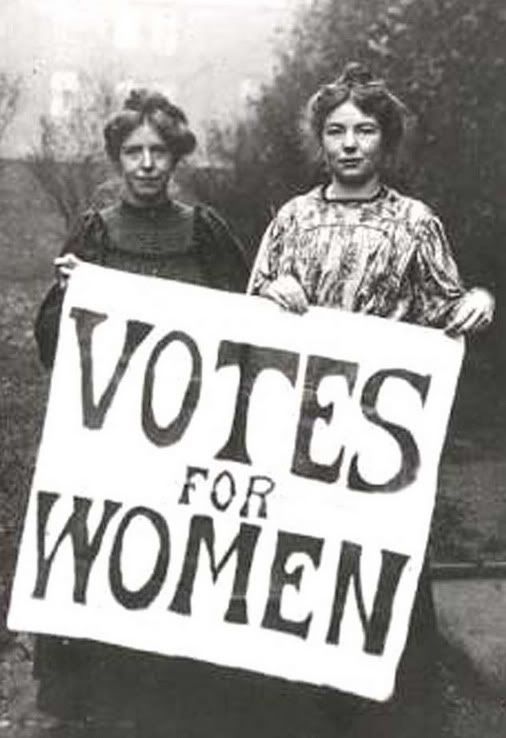
United States Women Lag in Gender Equality

Women's World Is Far From Equal
By Tenille Bonoguore
The Globe and Mail
Nordic Europe is the guiding light for gender equality in the world, topping a global list of 115 countries and laying claim to the world's best maternity leave, the best political participation rates and an education system in which women now outnumber men.

The World Economic Forum's Global Gender Gap Report 2006 named Sweden as the world's most progressive country when it comes to quality of the sexes, followed by Norway, Finland and Iceland.

Ranking the countries according to economic participation and opportunity, education, political empowerment and health and survival, Canada came in 13th and the United States ranked 29th. The small Middle East nation of Yemen came last in the global list.

The United States "lags behind many European nations" and also falls behind Canada, mainly due to its average score on political empowerment.

Canada is more consistent across the board, the group says, coming 10th overall for economic participation, 21st for education, 33rd worldwide for political empowerment and 51st for health and survival.

The Geneva-based World Economic Forum is a not-for-profit, non-aligned group. Its annual equity report said the gender gap was close to being eliminated in the realms of education and health, but the social power balance was still vastly skewed towards men.

"Taken together, women in the 115 countries covered by the index - representing over five billion of the world's population - have only 15 per cent of the political empowerment endowed to men," the report states.

The report, released Tuesday, said Sweden is the only country in the world where men and women form equal numbers among all ministers and parliamentarians.

"Women are the majority of all professional and technical workers and at least a third of the legislators, senior officials and managers in all five of the Nordic countries," it states.

At the other end of the spectrum, women in the Middle East had a little over half of the resources and opportunities available to men, the group says.

The Russian Federation came in at number 49, with its ranking battered by a "dismal performance" on female political empowerment.

The Philippines is the only country in Asia to have closed the gender gap on both education and health and was only among five nations in the world to have done so. The others are the Dominican Republic, France, Honduras and Lesotho.

The Global Gender Gap rankings were:

1. Norway
2. Finland
3. Iceland
4. Germany
5. Sweden
6. Denmark
7. New Zealand
8. Slovenia
9. Philippines
10. Ireland
11. Netherlands
12. United Kingdom
13. Canada
14. Slovak Republic
15. Australia
16. Croatia
17. Russian Federation
18. Latvia
19. Sri Lanka
20. Lithuania

Photo: Suffragists. (Madison Women For Peace)

Related Articles:

The Empty Chair at the Table

By Bob Herbert
The New York Times
Philadelphia

The old stone house in the close-knit Mount Airy neighborhood that Sherwood Baker grew up in had for many years been the scene of rollicking holiday gatherings.

“We would have big, ridiculous dinners,” said his mom, Celeste Zappala. She chuckled. “They weren’t formal, believe me. The dishes wouldn’t match and we’d never have enough silverware. But it was great fun.”

Sherwood, a big man at 6-4 and about 250 pounds, would be there with his wife, Debra, and son, J.D., his two brothers, and sometimes his dad, even though he is divorced from Ms. Zappala. Others would be there, as well. “We’d look for stray people,” Ms. Zappala said, “somebody who didn’t have someone to be with. We could always fit more people around the table. ”

The gatherings are more subdued now. Ms. Zappala can still remember almost every detail of the April evening in 2004 when the man in the dress uniform with the medals on his chest showed up on her porch with the bad news.

“He had a notebook in his hand,” she said. “I could see him very clearly even though it was dark and kind of raining. So I came out on the porch and I looked at him. And I knew, but I didn’t want to know.”

Sgt. Sherwood Baker of the Pennsylvania National Guard had been in Baghdad only six weeks when he was killed. The bitter irony that will always surround his death was the fact that he was helping to provide security for the Iraq Survey Group, which was hunting for the weapons of mass destruction. He died on April 26, 2004, in an explosion at a factory that was being inspected.

Grief is magnified during the holidays, and with the toll in Iraq steadily mounting, there are now thousands of families across the U.S. who are faced, like Sergeant Baker’s relatives, with an awful empty space at their Thanksgiving tables.

Ms. Zappala pulled out photos of Sherwood and the rest of the family laughing it up at holiday parties, and spoke of the ferocious grief that has since gripped everyone. “We won’t be the same now,” she said. “We’re totally different people than we started out to be.”

One of the family’s last Christmas presents for Sergeant Baker was a global positioning device. “He was told that he had to have one,” said Ms. Zappala, “but the Army wouldn’t buy it for him. So we got him one. That was our last Christmas together, 2003. We were all trying to be happy but each of us was frightened and worried about what was going to happen to him.”

Sergeant Baker’s story, for the most part, was typical. He was a social worker who joined the National Guard in 1997 in part for civic reasons, but also because he needed help paying off his college loans. “It was extra money,” his mother said.

What was unusual was that Ms. Zappala was a longtime peace and social justice activist. She opposed the Iraq war from the very beginning, and the last thing in the world that she wanted was for her son to be in it. Sergeant Baker told her not to worry, that no one from the Pennsylvania National Guard had been killed in combat since World War II.

But she worried. And when it was clear that Sergeant Baker would be sent to Iraq, she looked for a way out. “I told him, ‘If you don’t want to do this, I’ll take you to Canada,’” she said. “But he said, ‘No, I made an oath before God. And besides, they would court-martial me. I’ll just go. I’ll do it and I’ll come home.’ ”

Ms. Zappala remains opposed to the war and is an active member of the antiwar group Military Families Speak Out. There’s a sign on her porch that says, “War is Not the Answer.” But she’s found that there’s no comfort to be drawn from her protests, however strongly she believes in them.

“Where’s the comfort in being right?” she asked. “Everything we said was right. Sherwood died looking for the weapons of mass destruction that didn’t exist. All the nonsense about the Al Qaeda connections and Sept. 11th. They were all lies. It was all wrong. But none of that brings Sherwood back to the table.”

While standing on the porch where she got the terrible news about her son, Ms. Zappala spoke of the many other families that have lost children, or other close relatives, to the war. “I’m very aware that it didn’t just happen to us,” she said. “For everybody, it’s the same horrible loss. It’s the same tragedy. It doesn’t make any difference whether someone was for or against the war. We’ve met families who were very supportive of the war and we were crying with them. The pain is the same.”

Photo Credit: Bob Herbert. (The New York Times)

Davey's Deluded Visions of Decisions

For what it's worth .... heeerrrre's Brooksie.

In another of his continuing articles based on who-knows-what, Davey-boy makes one of the dumbest assumptions I have heard yet: that Rumsfeld became "a rogue secretary, not committing enough troops, not returning phone calls, not sharing information, and nobody did anything to discipline him," because he was asked to carry out policies he himself didn't decide.

Davey, dearest. For your information, Rummy was one of the two chief administration architects of the Iraq policy. He and Cheney had been plotting to execute their "new world order" since their failure to sabotage Ford's White House into accomplishing their idiotic, ideological agenda. Rummy didn't screw up because of having to execute someone else's agenda; he screwed up because he couldn't even execute his own.

Where do you come up with this bull?


Building a Team of Rivals
By David Brooks
The New York Times
Over the next few months, I’m going to ask the presidential hopefuls the following question: What lessons do you draw from the Iraq experience about decision-making in the White House?

The candidates are going to answer by saying something like this: The lesson I draw is that the president has to have intellectual curiosity and access to all the necessary information. He can’t run a faith-based policy relying on certainty and instinct. When I’m president, I’m going to hear all sides.

Then, I’m going to respond: Oh, please. Save that stuff for the campaign rallies. If you know anything about how the Bush administration actually worked, you know that people at the midlevels were consumed by doubt. There were interagency meetings galore, and dozens of memos written by subcabinet officials fully aware of how badly things were going. Aside from the Bush-Cheney-Rumsfeld personalities, it was the decision-making process itself that was screwed up. Did you draw any lessons from that?

Then the candidates will level with me in that low-toned voice they adopt when speaking the truth, and if they’re smart, they’ll say something like this:

O.K., you’re right. There are structural problems that have emerged during the past several administrations that crippled planning for Iraq. Here’s what I think they are:

First, the vice president can’t have his own secret policy channel. He can’t sit silently at meetings and then, during private lunches with the president, countermand all that was accomplished.

Second, the White House can’t obsess about leaks. This administration in particular twisted itself into knots to prevent leaks, and you know what? Everything came out anyway. It’s stupid to narrow decision-making to small, insular circles of trust to prevent leaks. Everybody correctly assumes their private comments will be made public in any case.

Third, the White House staff has too much power. We understand how this happened. Presidents get sick of parochial cabinet secretaries who become special pleaders for their agencies. The president needs people he can trust, and who believe in his policies, so he shifts power to those around him who worked on his campaigns.

The problem is the White House is staffed by younger people who are feverishly devoted to the president. Especially in the first years, they try to make every day pleasant for him, which means not bringing him bad news, or setting up a meeting that might turn nasty. Furthermore, while the White House staff is big enough to insulate the president, it is not big enough to carry out policy. When it is asked to, you get thousands of ad hoc meetings attended by people who have limited power to control facts on the ground.

Which leads to the fourth and most important lesson: There is a yawning gap between those who decide policies and those who carry them out. This hurts in two ways. The people who have run an operation for decades, who have some expertise, have little input before a decision is made. Then, after the decision is handed to them, they have no investment in its success and discover they can go off and subvert the policy and no one can do anything to stop them.

In the Iraq occupation, Rumsfeld became a rogue secretary, not committing enough troops, not returning phone calls, not sharing information, and nobody did anything to discipline him. The National Security Council had to jump in and try to run operations, which it’s not equipped to do.

To address these problems, the next president has to restore cabinet government — set up teams of rivals, as Lincoln, Eisenhower and Reagan did. For example, during his first term, President Reagan had more than 500 cabinet committee meetings, according to Stephen Hess of the Brookings Institution. Each cabinet committee consisted of four to six department heads, who would work out policies and put them into effect.

A president who vests power in cabinet members gives himself colleagues, people of similar age and stature who can argue with him face to face. By formalizing a decision-making process he balances egotistical secretaries against each other. A Rumsfeld would have to go to meetings and explain himself to his rivals. Entire departments couldn’t be shut out of the loop, the way Treasury and State were. The agencies that carry out policy would have a link to the people who decide it.

It’s possible to screw up cabinet government too — Jimmy Carter did. But the next president has to be a thoroughgoing reformer, which means reforming the way the executive branch works too.

Photo Credit: David Brooks. (The New York Times)

Olbermann: Lessons from the Vietnam War

Olbermann gives the Shrub a history lesson and another in a series of harsh admonitions of his refusal to face reality and tell the truth.


Trouble viewing this video? CLICK HERE.

Click here for Transcript (and video)

Excerpt:
“We’ll succeed unless we quit.”

No, sir.

We will succeed against terrorism, for our country’s needs, toward binding up the nation’s wounds when you quit, quit the monumental lie that is our presence in Iraq.

And in the interim, Mr. Bush, an American kid will be killed there, probably tonight or tomorrow.

And here, sir, endeth the lesson.

Tuesday, November 21, 2006

Friedman's Peace Plan

Tom Friedman's latest Times op ed presents a blueprint for world cooperation and peaceful coexistence in the form of a fictitious memo from Nancy Pelosi to President Hu Jintao.

This is the kind of thinking we need from our leaders: ideas to make the world a cooperative, peaceful and healthy place, and an end to talk of threats, domination and war.

Keep it up, Tom.


A Partner for Mr. Hu
By Thomas L. Friedman
The New York Times
Memo From: Speaker of the House Nancy Pelosi.

To: President Hu Jintao of China.

Dear President Hu: I am sure you thought that your first letter from me would be about trade and human rights. Those issues still animate my party. But I’m convinced that we have a better chance of making progress on them if we can first build a partnership to address the urgent issues of energy and climate change, which affect us both.

President Hu, President Bush promised the world when he spurned the Kyoto Protocols that he would offer an alternative. He never did. So I will. I want to propose a “New Shanghai Communiqué.” The 1972 Shanghai Communiqué forged an understanding between China and the U.S. to defuse the most destabilizing issue of that day: the struggle over Taiwan. The New Shanghai Communiqué would defuse the most destabilizing issue of our day: the world’s unsustainable appetite for energy.

What should a New Shanghai Communiqué include? First, China has committed to a 20 percent reduction in energy consumption for every 1 percent of G.D.P. growth by 2010 — a courageous commitment that Mr. Bush has also failed to make. I will see you and raise you. I am going to propose that the U.S. as a whole match the 4 percent annual improvement in energy efficiency already undertaken by California. That would mean at least a 25 percent improvement by 2012.

China has also just imposed a national renewable energy requirement, setting a target of generating 10 percent of its energy from renewables — wind, hydro, solar power and biofuels — by 2020. I will see you and raise you again. I want to require our power grid operators to purchase 20 percent of their energy from environmentally sound renewables by 2020.

President Hu, if we can hit these targets we would put our countries — the two largest emitters of carbon dioxide — on a much more sustainable growth path and set an example that would change the world. We would create less dependence on despotic oil states, encourage everyone to be energy efficient and climate friendly, and create more room in the energy market for big emerging economies, like China, to grow without competing head-on with America for oil and gas. Instead of fighting over a shrinking pie of fossil fuels, let’s create a huge new energy pie — from renewables and efficiency savings.

Second, I want to lead an effort to help China invest in factories devoted to clean power technologies — green cars, solar panels, wind turbines — in some of our states, like Ohio, most hurt by globalization. Green energy is going to be the growth industry of the 21st century. We have some great technologies. You have $1 trillion in reserves because of your trade surplus with us. Nothing would improve China’s standing in America more than using its reserves, as Japan did, to create good U.S. jobs and profits for Chinese companies — all while advancing the clean power industry.

Third, I propose we send over a “Green Corps” of U.S. engineers to travel across China and demonstrate something many Chinese officials do not understand: being green is profitable. Too many of your local officials think green is a luxury you can’t afford. You will never break out of your cycle of environmental degradation until those officials understand that pollution is wasted energy and wasted money. Our best companies, like G.E. and DuPont, consistently find that operating “green” costs much less than they anticipate and saves much more.

President Hu, we both know that the millions of cars now choking your streets are only the beginning. Your biggest concern is the 800 million Chinese living in the countryside, who need transportation to better their lives but who can’t afford even the cheapest car. Every year they buy more than 30 million motorcycles and farm vehicles, which have the advantage of being cheap but which use the most rudimentary, polluting motors — blackening your skies.

We need to bring our U.S. engineers, who know how to clean up small engines, together with your manufacturers, who know how to mass produce them cheaply, to forge companies that will not only clean up the air in developing countries but make money for both of us. If that happens, President Hu, China has the potential not just to have a “Green Olympics” in 2008, but to offer the developing world a whole new model of sustainable growth.

President Hu, over 40 years ago your country tried to make a Great Leap Forward alone — to change China. This time, let us make a Great Green Leap Forward together — and change the world.

Best wishes, Nancy.

Photo credit: Thomas Friedman. (Fred R. Conrad/The New York Times)

Lost in the Desert

By Maureen Dowd
The New York Times
Iraq now evokes that old Jimmy Durante song that goes, “Did you ever have the feeling that you wanted to go and still have the feeling that you wanted to stay?”

It’s hard to remember when America has been so stuck. We can’t win and we can’t leave.

The good news is that the election finished what Katrina started. It dismantled the president’s fake reality about Iraq, causing opinions to come gushing forth from all quarters about where to go from here.

The bad news is that no one, and I mean no one, really knows where to go from here. The White House and the Pentagon are ready to shift to Plan B. But Plan B is their empty term for miraculous salvation.

(Dick Cheney and his wormy aides, of course, are still babbling about total victory and completing the mission by raising the stakes and knocking off the mullahs in Tehran. His tombstone will probably say, “Here lies Dick Cheney, still winning.”)

Even Henry Kissinger has defected from the Plan A gang. Once he thought the war could work, but now he thinks military victory is out of the question. When he turns against a war, you know the war’s in trouble. He also believes leaving quickly would risk a civil war so big it could destabilize the Middle East.

Kofi Annan, who thought the war was crazy, now says that the United States is “trapped in Iraq” and can’t leave until the Iraqis can create a “secure environment” — even though the Iraqis evince not the slightest interest in a secure environment. (The death squads even assassinated a popular comedian this week.)

The retired Gen. Anthony Zinni, who thought Mr. Bush’s crusade to depose Saddam was foolish and did not want to send in any troops, now thinks we may have to send in more troops so we can eventually get out.

Lt. Gen. Raymond Odierno, whose soldiers pulled Saddam out of his spider hole and who is returning to Iraq to take charge of the day-to-day fight, has given up talking about a Jeffersonian democracy and now wishes only for a government in Iraq that’s viewed as legitimate. He has gone from “can do” to “don’t know.” He talked to The Times’s Thom Shanker about his curtailed goals of reducing sectarian violence and restoring civil authority, acknowledging: “Will we attain those? I don’t know.”

At a Senate hearing last week, Gen. John Abizaid sounded like Goldilocks meets Guernica, asserting two propositions about the war that are logically at war with each other. He said we can’t have fewer troops because the Iraqis need us, but we can’t have more because we don’t want the Iraqis to become dependent on us.

He contended that increasing the number of our troops would make the Iraqi government mad, but also asserted that decreasing the number would intensify sectarian violence.

This a poor menu of options.

As Peter Beinart wrote in The New Republic this week, “In a particularly cruel twist, the events of recent months have demolished the best arguments both for staying and for leaving.” Noting in the same magazine that “we are approaching a Saddam-like magnitude for the murder of innocents,” Leon Wieseltier worried that the problem may be deeper than the number of our troops; it may be Iraq itself. “After we invaded Iraq, Iraq invaded itself. ... We are at the mercy of Iraq, where there is no mercy.”

Kirk Semple, The Times’s Baghdad correspondent, wrote about Capt. Stephanie Bagley, the daughter and granddaughter of military policemen who was enthusiastic a year ago about her job of building a new Iraqi police force. But that was before the militia so inexorably began to infiltrate the police, presumably with the support of some leaders in Iraq’s dysfunctional government. Now, with the police begging the Americans not to make them patrol Baghdad’s mean streets and showing her their shrapnel wounds, she just wants to get her unit home safely, without losing another soldier. She said her orders were to train a local force to deal with crimes like theft and murder, not to teach them how to fight a counterinsurgency.

Aside from telling Israel to be nicer to the Palestinians, as if there lies Iraq salvation, James Baker will mostly try to suggest that the U.S. talk to Iran and Syria. Yesterday, after the Lebanese Industry Minister Pierre Gemayel, an opponent of Syria, was assassinated in Beirut, President Bush said he suspected that Iran and Syria were behind the murder.

Maybe Mr. Baker had better find Plan C.

The Pentagon is trying to decide whether we should Go Big, Go Long or Go Home.

Go figure.

Photo Credit: Maureen Dowd. (Fred R. Conrad/The New York Times)

How Low Can Rupert Go?

Nicole's family: News Corp. tried to buy our silence
"The O.J. Simpson book saga took another twist Tuesday when his former sister-in-law, Denise Brown, accused the media company behind the project of trying to buy her family's silence for 'millions of dollars.'

[...]

A spokesman for News Corp., owner of Fox Broadcasting and publisher HarperCollins, confirmed that the company had conversations with representatives of Nicole Brown Simpson's and Ron Goldman's families over the past week and that the families were offered all profits from the planned Simpson book and television show, but he denied that it was hush money."
Hold your nose should you choose to read more.

Next Move in Iraq?

Americans Want a New Approach

Wesley Clark writes:
"Withdrawal? A bad idea. Partitioning? Won't work. The right approach is one that addresses U.S. interests in the entire region....

... Neither the Bush administration's latest pronouncements nor the current political dialogue has adequately engaged these vital interests. The calamity in Iraq has hogtied the Bush administration, inviting disarray, if not instability, in neighboring countries that also require our attention.

U.S. interests include dissuading Iran from pursuing nuclear weapons and its hegemonic aspirations, providing security assurances for the rapidly developing Arab Gulf states and working with our friends in the Middle East to ensure access to oil resources and regional stability...."
Read more.

Carville Fails to Dump Dean

I confess to being baffled by the entire "Dump Dean" campaign which surfaced immediately after the Democratic mid term election victory. Why would a Democrat want to create a wedge in the party immediately after successfully pulling it together? It's beyond me.

If, as this story implies, Carville was on his own in attempting to oust Dean, shame on him.

Rather than get all puffed up over differences in political strategy, Carville would better spend his time demanding investigations into voting machines across the country which skewed a fairly consistent 3% in favor of Republicans -- once again denying the Dems their due -- and once again, indicating hacked elections and the necessity for comprehensive elections reforms.

Cut the ego antics, kids. We won. Let's congratulate each other and get to work securing our elections, among other things ....

Hil's no dump Dean fan
BY KENNETH R. BAZINET
DAILY NEWS WASHINGTON BUREAU

Her camp sez Carville on his own in coup bid

"WASHINGTON - James Carville's attempt to topple Howard Dean as chairman of the Democratic National Committee failed after state party officials and even a vocal critic of Dean crushed the coup, officials said.

Insiders from the Clinton camp winced at Carville's untimely remarks last week calling for Dean's ouster in favor of unsuccessful Senate candidate Harold Ford of Tennessee.

'It was not coming from [Sen. Hillary Clinton] and they made a real effort to distance themselves from James' comments,' said a source close to the Clintons.

The Clintonistas don't want an undeserved backlash from the activist wing of the party that overwhelmingly supports Dean, especially because some anti-Clinton Democrats have blamed Sen. Hillary Clinton (D-N.Y.) for the attack by Carville, a longtime Clinton insider. Those forces claimed Carville's motive was to topple Dean in favor of a chairman more favorable to Sen. Clinton's bid for President.

Carville's remarks last week came as House Speaker-designate Nancy Pelosi (D-Calif.) bungled the race for Democratic majority leader. Party operatives acknowledged the Carville and Pelosi sideshows were detracting from their election victories.

'We applaud Chairman Dean for his commitment to ensuring Democratic candidates and state Democratic parties have the resources and tools needed to compete and win, and we remain committed to the hard work of rebuilding our party for the future,' said Mark Brewer, president of the Association of State Democratic Chairs.

Brewer's organization endorsed Dean's $30 million effort that helped win six new Democratic governorships and control of 10 more state legislatures. Dean is credited with launching a '50 state program' to rebuild the party at the grass roots, as the GOP so successfully has done for the past 25 years.

'No question Dean can survive because this is a mathematical equation: He has the votes on the DNC because he has been investing in the state parties,' said party activist David Sirota.

Carville did not respond to attempts to contact him.

Even Dean-basher Rep. Rahm Emanuel (D-Ill.), chairman of the Democratic Congressional Campaign Committee and an exadviser to former President Bill Clinton, called Dean last week to say Carville was acting alone, and one-time DNC Chairman Don Fowler referred to Carville as an 'ill-advised' voice.

'Why do the Washington people think that they have a special prerogative to dictate what the Democratic Party needs?' Fowler wrote in an e-mail to the party faithful. 'Why should anyone want to mess with the team that won these remarkable [election] results?'"
Photo credit: James Carville. (www.autographedtoyou.com)

Monday, November 20, 2006

To be Blunt: Corruption Personified

By Thomas B. Edsall, Guest Columnist
The New York Times
Last Friday, the Republicans gave the Democrats a gift that will keep on giving: Roy Blunt of Missouri.

After an election repudiating the politics of Jack Abramoff and Tom DeLay, Republicans elevated Blunt from the number three spot in the leadership to number two.

Roy Blunt embodies the insidious, half-legal corruption that has permeated the G.O.P. majority since 1995. Blunt’s election as minority whip, by a 137-to-57 margin, was a defiant Republican rejection of calls to clean up their act. Warnings by Blunt’s challenger, John Shadegg of Arizona — “We ceded our reform-minded principles in exchange for a ...tighter grip on power” — went unheeded.

In 1998, DeLay put Blunt on the leadership ladder, making him chief deputy whip. Blunt modeled himself on DeLay, creating an identical network of state and federal political committees that raised money from the same lobbyists, corporations and trade associations that financed what became known as DeLay Inc.

If one political operation captured the essence of DeLay’s leadership, it was the Republican takeover of Washington’s influence-peddling industry. This industry, grossing $2.36 billion last year alone, eagerly accommodated DeLay’s demands to replace Democratic lobbyists and association executives with Republicans. In a mutually rewarding relationship, lobbyists who financed DeLay Inc. wrote amendments and bills, while DeLay received a flood of cash to build a multimillion-dollar network of PACs. These committees lavished contributions, corporate jets and year-round entertainment on Republican House members, ensuring their loyalty, and channeled cash into local political parties, helping to win control of state legislatures that, in turn, gerrymandered districts to implement a long-term strategy of larger G.O.P. Congressional majorities.

In 2003, after DeLay moved up to majority leader and turned the so-called K Street Project over to him, Blunt promptly converted a legion of Republican lobbyists into an arm of the House whip operation. Lobbyists have always been close to Congress, under rule by either party. What DeLay and Blunt did was to sacralize this relationship. In doing so, they transferred a chunk of power from Capitol Hill to business interests.

This unholy alliance was a crucial factor in transforming the G.O.P. into an army of spenders whose earmarks, appropriations and tax cuts rivaled the government largess of Lyndon Johnson’s Great Society.

In 2004, Blunt turned his lobbyist team loose to win passage of a bill eliminating a $50 billion corporate tax break that the World Trade Organization had ruled in violation of international agreements. These lobbyists inserted $143 billion worth of new corporate tax breaks, turning the bill into a Fortune 500 Christmas tree.

Blunt is not the easy target DeLay was. DeLay, a born-again Southern Baptist, by his own account had battled demon rum and the playboy life. Once he started down the path of righteousness, moralizing and sermonizing, he made enemies, painting a bull’s-eye on his back.

Blunt, by contrast, is bland, unctuous and adept at keeping a low profile. But there is plenty to see. After divorcing his wife of 35 years to marry a tobacco lobbyist, Abigail Perlman, he cleared his second marriage with the House Ethics Committee to get “a waiver of the limitations of the gift rule to allow me to accept gifts in connection with my wedding.”

Blunt unblushingly told the Heritage Foundation this month that Republicans “have allowed our efforts to defend traditional values to be defined as little more than a politically driven effort to appease ‘family groups.’ ”

For Blunt, the blurring of boundaries is a family tradition. His son Matt is the governor of Missouri. Another son, Andrew, is one of the state’s top lobbyists. Almost all Altria subsidiaries — Kraft, Miller Brewing, Philip Morris (remember Abigail Perlman) — hired Andy Blunt, along with other financial backers of Roy Blunt.

In Blunt, House Republicans have kept on display a top official reminding voters why they cast ballots for Democrats on Nov. 7. After winning the post of minority whip last week, Blunt declared that the Republicans had “come together ... frankly, to get rid of the bad habits that we may have developed in 12 years in the majority.” This is precisely the opposite of what they actually did, which was to affirm their bad habits. The burden on the Democrats will be to make the elusive Blunt a nationally recognized figure.

Thomas B. Edsall holds the Pulitzer-Moore Chair at Columbia University. He is a guest columnist this month.

Photo Credit: Roy Blunt. (Wikipedia)

KNOW YOUR ROY BLUNT:

Boy's Wish: Kill Them All

By Nicholas D. Kristof
The New York Times
GOZ BEIDA, Chad

“If I had a gun,” Ismail Hassan said venomously from his hospital bed, “I would shoot Arabs.”

“Surely not women and children?” I remonstrated.

“Every one of them,” Ismail snarled.

Ismail is a 15-year-old boy, and that conversation underscores how Chad is falling off a cliff, with escalating hatreds, violence and insecurity. He is a member of one of the black African tribes now being hunted down by the Sudanese-sponsored janjaweed Arab militia, at first in Darfur alone and now in Chad as well.

After the janjaweed attacked his village and shot his father, Ismail raced forward to cover his father’s body with his own. That courage didn’t move the janjaweed, who simply shot Ismail as well.

The genocide that started in Darfur in 2003 is now threatening to topple the governments of Chad and the Central African Republic. If these two countries collapse into chaos and civil war for years to come, then neighboring countries like Cameroon and Niger will be threatened as well — and the death toll triggered by the Darfur genocide will eventually number in the millions.

None of this was — or is — inevitable. In late 2003 and early 2004, some Republican appointees in the Bush administration (particularly in the Agency for International Development) were among the first to push for a government response to the slaughter in Darfur, but the White House wasn’t interested.

Then in 2004, Colin Powell boldly used the “genocide” label to describe Darfur, over initial Pentagon and White House objections, and several of his aides drafted a set of policy options to confront the genocide. Those included pushing the French to use fighter aircraft from their base in Chad to intimidate the janjaweed, pushing Egypt to be more involved, recruiting peacekeeping troops from Pakistan and Bangladesh, and generally using American diplomatic muscle to push harder for a solution.

None of those things happened, partly because of reluctance from the White House and Pentagon, and partly because of resistance from France and other countries. So the genocide in Darfur has steadily expanded.

Arabs here in Chad repeatedly complain now that the black Africans steal their cattle, poison their wells, occupy their land, and shoot at them. I don’t see much basis to those charges, for the Arabs have assault rifles and rocket-propelled grenades (supplied by the Sudanese), while the black Africans have bows and arrows, but this narrative is widely held among Arabs.

“We consider them our enemies and they consider us their enemies,” said Brahim Wadia, the patriarch of a group of Arabs who were grazing their cattle on what had been a black African farm. “So each side will shoot the other and kill the other.”

Mr. Brahim and most members of his entourage were light-skinned, and they were civil to me (considering it white solidarity?). But that same morning nearby, several black Africans who tried to recover food from their burned and abandoned village were shot dead.

One person in Mr. Brahim’s party was a boy of about 13 with black skin who looked unlike the others. He appeared physically unable to speak, and it wasn’t clear if he had been hired as a herdsman or captured in a raid and enslaved.

The most common question I get from readers about Darfur is: What can I do? The simplest answer is to write or call the White House and members of Congress. (See how your representative does on the issue at www.darfurscores.org). Imagine if Mr. Bush had made Darfur an important issue at the Asian summit meeting last week, if he had returned via Cairo for a meeting with Arab leaders, if he had dispatched Condi Rice to Chad to shore it up.

Beyond pushing our own government, we can write the embassies of countries like France and Egypt that could play especially crucial roles. The same is true of China, which provides Sudan the guns used to shoot children like Ismail. We in the news business, including Arab and European television networks, could use a few pokes to appreciate that genocide is newsworthy.

The heroic efforts of aid groups in Darfur and Chad — 13 aid workers have been killed in Darfur since May — deserve support as well. (I list some groups active in Darfur in my blog, nytimes.com/ontheground.) The aid workers risk their lives daily to try to save people, putting up with janjaweed, scorpions, camel spiders and pit toilets inhabited by bats. They can use our backup.

Photo Credit: Nicholas Kristof. (Fred R. Conrad/The New York Times)

Also See:

  • In war-torn Sudan, women wage peace | csmonitor.com
    When the farming tribes of Darfur took up arms more than two years ago against what they saw as a neglectful Arab-dominated government, Samia Ahmed Nihar's brothers, uncles, and male cousins joined the struggle. But as a lecturer in development studies at Khartoum University in Sudan's capital, Ms. Nihar, a mother of two, took on a different role.

More Republican Juvenile Politics


I can't help but read the following article and think of the Republicans as a bunch of little boys oh so threatened by the all the little girls in class who get better grades and seem so much smarter than they.

Republicans plot to bring down Pelosi ... and Clinton with her:
"... Senior party operatives told The Sunday Telegraph that they are already co-ordinating plans to attack Nancy Pelosi, the liberal Californian congresswoman and Speaker-in-waiting who suffered a damaging rebuff from her own party caucus last week.The Republican strategy is not only to undermine Mrs Pelosi's control of the House but also to associate her in voters' minds with Senator Hillary Clinton, the frontrunner for the 2008 Democrat presidential nomination.'Two years of Pelosi gives a good idea of what four years of Hillary will be like,' said Tom DeLay, the Republican powerbroker who ran his party in the House before he was caught up in a lobbyist corruption scandal. 'They are both committed liberals and we will make that clear to the American people.'...."

Photo Credit: Nancy Pelosi Official Government Photo (Wikipedia)

When Justice isn't Justice

If you're an American and you're in Iraq and you kidnap and murder innocent Iraqis, have no fear. There are plea bargains for all!

Plea deals pile up for accused Marines:
In the beginning, there were eight. A squad of seven Marines and a Navy corpsman charged with kidnapping and murdering an Iraqi man, a crime described by a prosecutor as especially brutal. They faced military trials; the death penalty was possible. And now there are four. In the six months the men have been held at the Camp Pendleton brig, the profile of the Hamdania cases has changed dramatically. The death penalty is off the table and four of the defendants have struck plea bargains.

[...]

"They killed a 52-year-old crippled man in cold blood," Lt. Col. John Baker, a prosecutor, said during a recent hearing. "They killed a retired police officer with 11 children and four grandchildren. Hashim Awad was a very forgiving and gentle man. He was precisely the kind of man (the Marines were) sent to help."
This is the "justice" America exports to Iraq. This is the example we set. And we wonder why America is held in such low esteem since the reign of King George and his Merry Band of Torturers?

As Americans, if do not protest, by default we condone this. Write to your representatives ... or do nothing: the choice is yours. You and you alone define what kind of country you live in by the action you choose to take or not take.

Gonzales Blasts Surveillance Critics


These guys just don't give up.... But neither do we....

Chase Squires, Newsday:
"Attorney General Alberto Gonzales contended Saturday that some critics of the Bush administration's warrantless surveillance program were defining freedom in a way that poses a "grave threat" to US security."
How 'bout this, Alberto:
You and administration supporters of warrantless surveillance are posing a "grave threat" to our democracy and freedom.
Photo Credit: Win Without War

SUCCESS: FOX Bails on O.J. Simpson Book, TV Special


Under pressure and fierce criticism from the public, News Corp. has canceled the O.J. Simpson book and TV special.
"I and senior management agree with the American public that this was an ill-considered project," said Rupert Murdoch, News Corp. chairman. "We are sorry for any pain that this has caused the families of Ron Goldman and Nicole Brown Simpson."
Thanks to everyone who signed the petition to boycott FOX in protest of the O.J. book and interview.

Photo Credit: O.J. Simpson (L), Rupert Murdoch (R) (AP via Huffington Post)

Also See:

Sunday, November 19, 2006

Sexploitation Crackdown

Bought and Sold
By Bob Herbert
The New York Times
Atlanta

When Mayor Shirley Franklin recently announced that the city would be cracking down on the pimps and johns who prey on under-age prostitutes, she also disclosed publicly for the first time that she had been molested when she was a young girl.

Speaking at a gathering of reporters, local officials and civic leaders, the mayor spoke frankly about the incident, in which she was abused at the age of 10 by the father of a girlfriend. She then asked how many of the women in attendance had endured similar experiences. Several women in the room raised their hands.

One of the most tightly kept secrets in the U.S. is the extent to which children are sexually exploited, not just by child pornographers and compulsive pedophiles, but by men who are viewed by their relatives, friends and neighbors as quintessentially solid citizens.

In an interview on Friday, Ms. Franklin told me: “It seemed appropriate to reveal my story in that setting, because what we were trying to do is demonstrate that this can happen to anyone. Not only can it happen; it does happen to a lot of children.”

Atlanta has become a major hub of commercial sex in the U.S. It’s a full-fledged sex-tourism destination, with thousands of strippers, prostitutes and other sex workers accommodating an endless stream of johns from around the country. Under-age girls (some as young as 10 and 11) are a significant part of that trade. Many of them were already carrying the scars of sexual molestation when they got into prostitution.

A study of the commercial sexual exploitation of girls in Atlanta, released a year ago by the Atlanta Women’s Agenda, an advisory group formed at the mayor’s request, said:

“Atlanta, being a convention and sports event center, has a thriving ‘adult entertainment’ industry: strip clubs, lingerie and sex shops, escort services, massage parlors. At the same time, Atlanta generates its own lost battalions of emotionally and physically abandoned children and is a magnet for such children from outlying areas. These children are vulnerable to the pimps and their recruiters, but the pimp would have no interest in the children if there were no demand.”

Ms. Franklin, who is 61, is trying to jump-start a cultural change that will expand awareness of the widespread sexual exploitation of children in Atlanta and foster an attitude throughout the city that it is not to be tolerated.

It is beyond unusual for a mayor, especially the mayor of a city that depends as heavily on tourism as Atlanta, to shine a spotlight on a problem as repellent as child prostitution. I asked the mayor why she went ahead with such a high-profile campaign, which includes a “Dear John” initiative that has flooded the city with posters and public service announcements declaring that the men who “buy sex from our kids” will no longer be tolerated.

“We take the position in my administration that the best way to solve a problem is to face the facts,” she said, adding: “We know the problem is here. It’s happening on our watch. It’s unacceptable behavior, and we are not going to stand for it. So look for us to do everything in our power to change it.”

It won’t be easy. Law enforcement agencies have a notoriously poor record when it comes to prosecuting and putting away the pimps, traffickers and johns in the child sex trade. And there are very few resources, financial and otherwise, to help the kids once they are identified.

The mayor acknowledged the heavy lift that will be required: “Normally, by the time girls become prostitutes, there are a lot of other experiences that they’ve had, and you can’t turn that around with a pat on the back and a new set of clothes. There’s a great deal of psychological damage. They’ve lost trust in adults. They’ve lost self-confidence. Many of them have lost the will to do anything differently. They’re demoralized.

“So we’re just getting started. And we’ll be asking for a lot of help.”

The last time I was in Atlanta, about a month ago, I rode with the police as, among other things, they looked for a 15-year-old girl who had become a prostitute and was being used by her pimp to recruit other young girls. I remember looking at a circular with a picture of the child. She had the saddest expression on her face.

Over the weekend I checked with the cops to see if they had found her. “We never did,” said Lt. Keith Meadows, who heads the city’s vice unit. “We have reason to believe that she might have been trafficked out of the state.”

Photo credit: Bob Herbert. (The New York Times)

CIA: Iran NOT Developing Nuclear Weapons

The truth will set us free.

The fact that there is zero evidence that Iran is developing nuclear weapons surprises few of us who have been following the administration's rhetorical build-up to war with Iran (strategically identical to the Iraq pre-war WMD propaganda campaign).

Thankfully, investigative reporter Seymour Hersh not only confirms our scepticism, but reveals this week in The New Yorker , a classifed draft CIA assessment which found no firm evidence of a secret drive by Iran to develop nuclear weapons, as alleged by the White House.

Read more.

Cartoon credit: Steve Bradenton. (Grow-a-Brain)

Read Seymour Hersh's report:

Iran Reader:

  • Bush's Desire for a Conflict With Iran Is A Crisis Made in Israel
    One must recognize the role that the Holocaust plays on the psyche of Israel to understand why it would never tolerate a nuclear Iran.

    "...there is an element of hypocrisy inherent in the Israeli position. Israel possesses nuclear weapons capabilities that were acquired surreptitiously, and fields a force of modern ballistic missiles capable of firing nuclear warheads into not only Iran, but also every other nation in the region. The irony of Israel, a nation born of the Holocaust and alone among Middle Eastern nations in possessing the holocaust-generating power of nuclear weapons, condemning Iran for its rhetoric while itself espousing the demise of the Iranian government, is lost on few outside of Israel and the United States, and for a large part explains why the legitimacy of the Israeli concerns about Iran to a large extent fall on deaf ears...."
  • VIDEO: Scott Ritter debunks Iran myths
    In a recent Democracy Now! appearance, former weapons inspector Scott Ritter talks about his surprising freedom to roam around Iran, its pro-America sentiments, and a major myth about president Ahmadinejad.

    Pass it along to friends and family who believe that war with an original member of the "Axis of Evil" is inevitable....
  • Seymour Hersh: The Admin's war to bomb Iran
    Seymour Hersh's latest article is the very definition of required reading.

Turn the Other Cheek at What Cost?

Nicholas Kristof brings us face to face with Genocide. Meet Halima Abdelkarim.

"If I am not for myself, then who will be for me? And if I am only for myself, then what am I? And if not now, when?" -- Rabbi Hillel, from the section of the Talmud called Pirkei Avot (1:14) ["Ethics of the Ancestors"]

The Face of Genocide
By Nicholas D. Kristof
The New York Times
GOZ BEIDA, Chad

A woman named Marguerite H. wrote to me recently to complain about my columns on Darfur. “While the situation there is dreadful, we have plenty of needs to be filled at home,” she wrote. “You would be better off putting your energy into making a difference here at home.”

So, Marguerite, meet Halima Abdelkarim. Her life is partly in your hands. Watch her story [See Video Below], and see if you still think we should put off helping her until we have solved our own problems.


(Trouble viewing this video? Click here or here.)

Halima, 20, belongs to the Dajo tribe, one of the black African tribes being slaughtered by Sudanese-sponsored Arab militias called the janjaweed. The attacks began three years ago, but the world largely shared your view, Marguerite, that Darfur was a tragedy but not of strategic significance. And so we have fussed a bit but allowed the genocide to spread.

This March, Darfur’s slaughter crossed the border and reached Halima’s hometown in Chad. The janjaweed killed many men and seized 10 women and girls, including Halima and her little sister, Sadia.

Halima says that the janjaweed, many of them wearing Sudanese military uniforms, mocked the women with racial epithets against blacks, beat them with sticks, and gang-raped them all. Halima, who was then four months pregnant, says she was raped by three men and saw two rape Sadia — who was just 10 years old.

After two days of torment, the janjaweed released them. “But Sadia refused to give up her donkey, and so they shot her,” Halima recalled. “I was with her. She died right away.”

The survivors trekked to a shantytown outside Goz Beida. At first they were safe, and Halima gave birth to a baby daughter. But a couple of months ago the janjaweed began to attack them when they left the camp to get firewood.

Still, the world shared your attitude, Marguerite: It’s sad but a long way off, and anyway we have our own problems.

So last month, the janjaweed caught Halima again — in effect, we allowed the janjaweed to capture her again.

Halima was gathering firewood with a large group of women, who were hoping for safety in numbers. But raiders with guns suddenly appeared and caught seven of them.

The men asked what tribe they belonged to, and upon learning that they were Dajo who had already fled their villages, said, “We’re looking for you.” Halima was carrying her infant girl, Noorelayn, and she says the janjaweed threw the baby to the ground.

“You blacks are not human,” she quoted them as yelling. “We can do anything we want to you. You cannot live here.”

Finally, she says, three men raped her, beat her and stole her clothes. Another of the seven who were caught, Aziza Yakub, 17, confirmed Halima’s story, and added that the janjaweed told her while raping her: “You blacks are like monkeys. You are not human.”

The only way for these women to survive is to gather firewood to sell or exchange for food. Only women collect firewood, because, as they themselves say: “The men are killed; the women are ‘only’ raped.”

Halima’s husband doesn’t know about the latest attack. She didn’t tell him about the first one, but he figured out what must have happened during the two days she disappeared. Although he didn’t blame her, he left her for a few months partly to work out his anger at the janjaweed, and partly to cultivate crops to feed his family. The area he went to was attacked this month, with the janjaweed killing many men or occasionally gouging out their eyes with bayonets. There has been no word from him.

So, Marguerite, Halima’s future is up to us. In the last few days, Sudan has bowed to outside pressure and reluctantly agreed in principle to accept some U.N. peacekeepers in Darfur. That’s a reminder that pressure can work, but we haven’t applied nearly enough. For the peacekeepers to save lives and the killings to stop, much greater effort will be essential. If you didn’t find yourself too preoccupied, Marguerite, maybe you could make a phone call to the White House or write a letter to your member of Congress.

You have other priorities, I know, and so do we all. But our indifference has already allowed Halima to be gang-raped twice and her sister murdered in the first genocide of the 21st century. So, Marguerite, look Halima in the eye, and decide if you’re willing to turn away as she is slaughtered, or how many more times you’re willing to allow her to be raped.

you missed them, here are my earlier video reports from my trip to Chad.

Photo Credit: Halima Abdelkarim. (Nicholas D. Kristof/The New York Times)